October 9: Members’ Meeting
Members are asked to attend this business meeting. Our speaker series resumes on October 16.
Members are asked to attend this business meeting. Our speaker series resumes on October 16.
An important part of Ethical Culture’s mandate is Ethical Action — working to improve the world in which we live. This past winter and spring we developed a program to provide grants to area non-profits with an eye to having a positive impact on in our community. We issued a request for proposals and received many worthy applications. Five recipeints have been selected.
The Grant Making team will tell us about the organizations who will be receiving these grants.
 Pam Wilmot is the Executive Director of .
The 2016 Presidential election promises to be one of the bitterest in decades. Donald Trump’s comments about Democrats trying to steal the election may spur voter intimidation campaigns in swing states. Luckily, some of the worst voter suppression laws, passed after the Shelby decision overturning portions of the federal voting rights laws, have been recently struck down by the Supreme Court. To further protect the vote, non-partisan groups are planning one of the largest ever election observation efforts ever and have succeeded in advancing laws to modernize elections and include more voters in some states, including Massachusetts. Join us for a discussion of the challenges and opportunities to voting in Massachusetts and across the nation.
Members are strongly encouraged to attend, as we will consider changes to the by-laws.
In addition, we’ll look back over the past year, and talk about how things went and where we’re headed.
 The Boston Ethical Community is pleased to announce that, on June 12, 2016, Professor Erin O’Brien will be our speaker on the occasion of the third Ed and Ruth Roseland Memorial Lecture.
Professor O’Brien has been chair of the Department of Political Science at the Boston campus of the University of Massachusetts since 2014. Her particular areas of interest include the politics of poverty, social welfare policy, and urban politics.
 BEC members and friends gather to observe the Memorial Day holiday. All welcome.
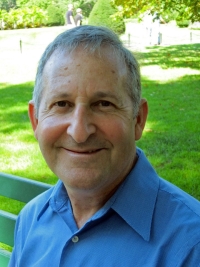 David Salstein of will be our speaker.
The Earth can be viewed as a system with a number of components — solid Earth, atmosphere, ocean, land-based hydrosphere. They interact with each other according to the natural physical laws related to quantities like energy, momentum, and mass, with water mass a special case. David will discuss this view, which has been recognized by climate scientists and those trying to make careful measurements using a number of different techniques.
 Roy Harris has been a journalist for some of the nation’s most respected news publications, including The Wall Street Journal and CFO Magazine. His latest book is .
For the sake of our democracy America needs a strong, independent press more than ever these days. With all the problems faced by our journalists today, can we count on them in the future to be a watchdog and a voice for the public? Roy Harris, a former long-time Wall Street Journal reporter and author of “Pulitzer’s Gold: A Century of Public Service Journalism,” returns to talk about his hope for journalism, and his belief that young people still want to make a difference in the American media.
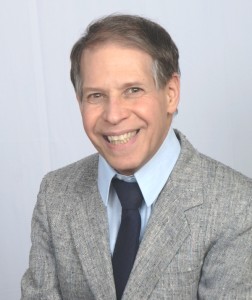 BEC Vice President Michael Bleiweiss will lead a Colloquy.
Colloquy provides an opportunity for self-reflection and contemplation within a nurturing, group environment. Participants use readings, music, and quiet sharing to reflect on a selected theme.
It was created at the Ethical Humanist Society of Long Island by Arthur Dobrin, Leader Emeritus. Each Colloquy discussion centers on a particular theme selected from Arthur Dobrin’s book, Spelling God with Two O’s. Groups consider such topics as awareness, serenity, character, transitions and friendship.

What is the relationship between religion and birth rates and what does it mean for the global population? BEC President, Brian King, will present a brief overview of the work of the Gapminder Foundation and its efforts to use statistics and data visualization to show trends in the health and wealth of countries around the world and to promote sustainable global development. A video and discussion of a by Hans Rosling, a physician, statistician, and Professor of International Health at Karolinska Intsitute in Sweden will follow.