 Robert Hildreth is Founder and Executive Director of .
Following a career in finance, Bob Hildreth created a matched savings program that encouraged low-income families to save toward higher education. This idea became the basis for FUEL Education, which has helped the families of more than 700 students from Boston, Chelsea, and Lynn save more than $600,000 toward their education. In his talk, Bob will discuss how a national savings program could help stimulate savings for college among lower income populations and ultimately make it possible for more families to send the children to college without the burden of crippling student debt.
]]>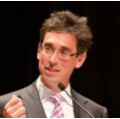 Evan Falchuk is the founder of the . As a candidate in the November 2014 gubernatorial election, he surpassed the three percent threshold required by state law for the United Independent Party to earn official status in the Commonwealth of Massachusetts. This milestone means the United Independent Party – dedicated to a greater diversity of modern, progressive ideas combined with fiscally sane solutions – is taking its place alongside the Democratic and Republican parties in Massachusetts.
Committed to moving from the outdated debate of “small government versus big government” the United Independent Party aims to offer smart, independent-minded people a way into our political process.
]]> Kerry Emanuel is Professor of Atmospheric Science at the Massachusetts Institute of Technology. A recognized authority on meteorology and climate change, he is both a political conservative and a harsh critic of those who deny the urgency of the global climate change crisis.
Professor Emanuel will address the scientific basis for concern about global warming and talk about why the issue remains controversial outside of the scientific arena.
]]> As the year came to a close, I found myself reflecting on the events of 2014; the summer was hard, but as fall approached, I had found some positive things to contemplate. Then we had the results of the 2014 mid-term election – nothing much positive there. As we headed toward 2015, the state of the country seemed to grow even more dismal. However, as the negative events multiplied, a spirit of activism seemed to have been awakened among the population. As the killings in Ferguson, New York, and Cleveland garnered increased publicity, outrage on the part of many Americans was percolating. Civil disobedience now is occurring to renew the fight for civil rights and to expand the discussion about what is meant by a “civil society”. Will it be sustained or will it be the trend of the season?
As a child of the revolution in values from the 1960’s (e.g. opposing the Vietnam War, supporting civil rights and women’s rights), I believed that change for the better was inevitable. After the events of 2014, I am more distressed than ever that our positive intentions were doomed by the capitalist structure that ensures greater inequality. Many Ethical Community members identify as “the greatest generation”; what must they think of today’s reality? Today, as capitalist forces increase their grip on the country, those on the margins of society seem not to be able to get a leg up. And the “margins” keep getting wider, now threatening to thwart the middle class. And in the United States, black Americans are clearly at the mercy of a society that fails to regard their humanity on equal terms.
Renewed discussion of civil rights is called for, and it should include both discussion and action on building a civil society for all. We can bemoan the facts of the last decades: the follies of Wall Street barons went unpunished, and the rich got richer; the rest of us were sunk by bad mortgages, college and credit card debt, increasing homelessness in our communities, and now deadly police violence.We see that government is less a source of remedy for society’s ills, and more a forum for dueling ideological clowns.
Most distressingly, government has expanded inequity and violence by militarizing community police forces. In Massachusetts, we saw it vividly in the police pursuit of the young disaffected attackers of innocent bystanders at the marathon on Patriot’s Day. In Ferguson, it was reported that the police force had only one taser available – does that justify killing as a means of maintaining social order? If the government can arm our police forces with weaponry from the military, including rocket launchers and submachine guns, is it not complicit in creating an uncivil society? Should it not first be identifying how to limit deadly force, rather than expand it?
If building a civil society is not happening within the structures of government, it must be a citizen charge to do so. Let’s join the civil disobedience movement and contribute to the reawakening of an active, positive spirit of community.
Happy New Year!
]]> Liberty and property are subjects for ethical discussion. Your ethical values justify your ideas about who should have which liberties and who should own what property.
Property enhances and restricts liberty. Ownership enhances the liberty of the owner to use the property while restricting the liberty of everyone else to do so. Woody Guthrie didn’t think the owner of the land ought to have the right to keep him from walking on it.
Property is a relationship between owner(s) and owned, established by government and custom, not by any god or nature. Transfers of land ownership are recorded at the Registry of Deeds. By universal custom, property you carry is presumed to be yours to do with as you choose. If a robber steals cash and later offers to buy something with it, he is presumed to be its owner unless proven otherwise.
In this hemisphere, and very likely everywhere else, all deeds of land ownership, including, of course, the land on which all our homes stand, if traced back far enough, stem from an act of armed seizure.
The American Indians may not have had the practice of assigning specific bits of land to individual owners, but they regarded regions of land as belonging to the tribes that lived there.
Private property either is privatized public wealth or it originated on previously privatized property. Privatization is an act of government that changes the status of wealth to private property, generally for the advantage of someone favored by the privatizer. According to my encyclopedia, William Penn, the father of the founder of Pennsylvania, was a pirate, authorized by the English government to prey on the shipping of residents of other countries. He loaned some of the proceeds of his loot to the English king, who later paid off the debt by granting Pennsylvania to his son.
How did the king get the authority to dispose of Pennsylvania? Armed seizure, which deprived the Indians of the liberty to be there.
From 1619 to 1865, Africans and their descendants in this country were regarded not as people with the right to liberty, but as property of others. The legacy of that attitude is still with us in some people’s minds, sometimes with deadly consequences.
A woman’s liberty, her right to go where she chooses, to own property, and not to be considered the property of a man, had to be won through political struggle, yet it is still not recognized everywhere in the world.
Pierre-Joseph Proudhon, the 19th century writer, said “Property is theft.” That’s true for property not obtained in exchange for something of equal or greater value, that is, for most of the world’s property. Your ethical values will inform your conclusions about the legitimacy of such property and its effect on everyone’s liberties.
]]> On January 18, 2015 the Boston Ethical Community will host a talk by Evan Falchuk, 2014 candidate of the United Independent Party for governor of Massachusetts.
In that race, Falchuk succeeded in getting more than 3% of the vote, thereby conferring official status on the United Independent Party. This means that the party can hold primaries and voters can register under the party’s banner.
Historically, third parties have been criticized for the spoiler effect, i.e., splitting the vote with more viable candidates of similar politics and thereby enabling an opposing candidate to win. Some Democrats harbor resentment against Ralph Nader for his role in the presidential election of 2000, when the small percentage of the vote he received would have been enough to make Al Gore the decisive winner in Florida.
In the case of Falchuk, it’s not completely clear which of the two major-party candidates for governor benefited most from his presence in the race, but the positions of the UIP, termed “pragmatic progressive”, are closer to those of the Democrats than the Republicans.
Falchuk’s position is that each candidate earns the votes that he or she receives. One of the main thrusts of his candidacy centered around the idea that many people are disengaged from the political process, and that a new party is needed in order to boost participation in civic life. He, like Nader in 2000, asserts that many of those who voted for him might well have not voted at all if the ballot had been limited to just the major parties.
Without doubt, voters in Massachusetts show a great deal of frustration with the limitations of either “R” or “D”. In fact, 53% of the state’s voters are now unenrolled in a party, making “I” the new majority. The election of a Republican governor pitted against a Democratic legislature is further indication that voters are not whole-heartedly embracing either major party.
What lies ahead for Falchuk and the UIP is an uphill effort to expand the base. There is no election for statewide offices in 2016, so the hard-won designation as an official political party will be lost if the UIP fails to register 1% of voters. The party must now mobilize to grow its ranks.
The deep disaffection that so many people feel toward conventional politics aligns well with the UIP’s aim. If they can build a convincing argument that they offer something other than ideologically-driven party politics to which we’ve grown accustomed, then perhaps they have a shot. There are strong undercurrents for change in the political world right now, and they could catch that wave.
Join us on January 18th to hear more from Evan Falchuk and the United Independent Party.
]]> A Lawyer’s Journey: The Morris Dees Story. Morris Dees and Steve Fiffer. 2001.
This book was sent to me by the Southern Poverty Law Center because of my long standing financial support. Morris was the son of an Alabama farmer who had always been friendly with Negroes unlike his bigoted siblings and neighbors. As a boy Morris played with other boys, black or white, even though he didn’t question Southern segregation. The beginning of the Civil Rights Revolution had little effect on him, but the violent southern reaction to it certainly did. He was impelled to study law, which his father had always wanted, and when he opened practice he did get involved in some civil rights cases. He had found himself able to start a profitable mail order business, having figured out how to send out letters which would get more than a one percent return. He finally developed a business with his law partner Millard Fuller which he managed to sell for six million dollars. At that time, he immersed himself in pro bono work in civil rights cases, defending Negroes who had been unfairly accused, or at least preventing a death sentence. Millard left the partnership to found Habitat for Humanity. They had been college friends and idealistic, but started to practice their idealism in different directions.
Millard had decided to serve God. Morris, who at one time had wanted to be a preacher, became a shaken Baptist. When he urged his fellow Baptists to help their Black brethren, the shock at their lack of response made him waver. He actually found Unitarians much more satisfactory, deciding that they actually practiced the teachings of Jesus rather than just talking about them and praying. He doesn’t say how or if his theological beliefs changed. Practice was the most important part of religion for him anyway. A Black state senator, Mac McCarley, had been unfairly accused of corruption and had wanted F. Lee Bailey to defend him. Bailey wanted $25,000, a large sum in 1969; so Morris got the case. Teaming up with a young New York attorney Joe Levin, Morris successfully defended him and restored to his seat in the Senate where he remained the only Black senator. This experience impelled Morris and Levin to found the Southern Poverty Law Center which would be able to defend the rights of Black and poor White people who couldn’t afford a lawyer. The Center has never charged for its services, depending on contributions.
In 1979, Morris made a radical change in the purpose of the SPLC. All the advances in civil rights for Blacks had inspired a furious resistance including the revival of the Ku Klux Klan. He decided that besides defending victims of discrimination and/or violence, that it was necessary to go on the offensive. He began a series of civil suits against various versions of the KKK with the intent of gaining a large judgment for his clients, large enough to drive the organization into bankruptcy and put it out of business. In several spectacular cases he succeeded in putting more than one KKK group out of action with all its resources gone. These cases needed hours of preparation using a team of several lawyers with the necessity of convincing what was often an all white southern jury to give justice to Black clients. The book describes two of these cases in detail, describing all the suspense in the courtroom. The KKK fought hard, using intimidation of witnesses and also trying to assassinate Morris on more than one occasion. The book concentrates on a few hard successful cases, but I am sure there were many others where he made only a partial victory or completely lost. He exposed one Klan that was conspiring to produce a totally white community covering several southern states with Blacks and Jews hanging from telephone poles. Dees started the suit in 1986; the Klan was planning to start the uprising in 1992. There was a lot of military training which involved several marines on active duty in the armed services. (The participation of troops on active duty is frightening, and is one of the dangers in having an all volunteer army. This is how would-be be right wing extremists get their military training. Remember Timothy McVey.)
Besides fighting extremists, Morris decided we should eliminate hate and prejudice. Now the SPLC produces a quarterly magazine called Teaching Tolerance, which they send out free of charge to all the public schools. This is a very important part of his mission, but takes only a few pages in his book.
Teaching tolerance is not as exciting as fighting right wing extremists, but it is very important. Morris Dees comes across as both an idealist and a canny strategist. He was able to turn some racists away from their hates and sometimes get them to testify against their former comrades. Morris always tried to make it clear that he would defend the free speech rights of Klan members, and was only suing or prosecuting them for their criminal actions. The book is well worth reading.
]]> The issue of climate change is both overwhelmingly important, and also distant and abstract. It is unlike the imminence of war, where motives which we recognize as bad—aggression, hatred, xenophobia, and national aggrandizement—threaten to produce disastrous results, and we can point to these bad motives with distressed warning. It is not like issues of social injustice, where the anger and pain of those who are victims remind us of the presence of the injured. Global warming was not the result of any evil act, but centuries of quite innocent and even beneficent acts—think of the early enthusiasm for electricity, or automobiles. But through a slow accumulation of scientific data, all of these things we thought were benign are now recognized as bringing about a result which is quite horrible. But it is a horror which won’t come upon us for decades. Global warming has therefore a kind of intellectual distance —we depend upon science to tell us what we can’t see much of day to day and won’t see the worst of until it is too late to do anything about it.
But these long-term results are disastrous indeed. They will be the 10 plagues of Egypt on a global scale—agricultural failure in the sub-tropical zones, starvation, mass migration of desperate populations, war, collapsed states; the rates of species extinction accelerated 1000 fold, giving opportunities for new scourges—explosions of life forms unchecked by stable ecological orders—unstoppable pathogens, invasive species of plants that take over the countryside, rampant vermin and insects; the hardening of people’s moral sensibility, as the violence and hatred of the desperate overwhelm all humane response, and defeat the impulse to help. Finally, all of these images of global warming may be superseded by far worse scenarios, where warming unleashes vicious cycles by which it becomes runaway—the release of methane from melting permafrost, or from the melting of from frozen methane at the sea bottom, both causing acceleration of the damage.
All of this makes the problem a test of the moral mind. It is necessary to read the future as well as we can on the basis of abstract scientific hypotheses and probabilistic data. And it obliges us on the basis of something which we cannot see to take action on a massive and global scale to change the business of energy production, the biggest business in the world, and an economic infrastructure built around it.
But what is one actually to do? I will talk a little about my own story, a step by step effort to come to terms with the moral issue, and to figure out whether there was anything useful I could contribute. I happened to be in an unusual situation that made it possible to address the problem of greenhouse gas emissions from buildings.
While I had been active in what you’d call ordinary environmental politics for a long time, I saw a particular and unusual opportunity in the fact that I happened to own since 1984 a big former rum distillery in South Boston (slides 2 and 3). The building occupies a city block. I had turned it into a haven for about 150 artists and was content to simply let the thing go along on an even but unspectacular financial keel (slides 4 and 5). A bit about the site:
We are on the old shoreline—everything to the North is filled land, which was sparsely utilized for 100 years (slide 6, 7, 8). Everything to the South was the old South Boston peninsula, a poor, working class, politically potent neighborhood, with the distinction of precocious criminal over-development. As Boston grew out to the size that it used to have before decades of decline, this vacant land to the North became valuable, lying between the business district and Logan Airport and now tied to transportation routes in all directions. The Menino administration pushed this land as the new Innovation District, and that caught on. It now competes well with Kendall Square as the center of cutting edge industries. And South Boston, with its beaches, monuments, and parking problems, became the center for high end Yuppie settlement.
So I had an opportunity to develop the property and, as I become more and more interested in environmental issues, thought that, having read a lot by people who were amateur visionaries and tinkerers, I would use the project to demonstrate just how energy efficient a building could be. I decided to preserve the old rum distillery, but to tear down the architecturally undistinguished bottling plant, and a structurally unsound cooper shop, and to build 65 units of housing, on top of 147 parking spaces, including café, food store, greenhouse, roof gardens, solar energy, cogeneration, and everything else I could think of (slides 9, 10, 11). So I decided to take on a level of debt which I still find unfathomable.
I thought that buildings were a good thing to do. First of all, I knew something about them. And almost no one else in the climate movement did. Second, buildings use about 40% of all energy in the economy—just their operation for heat, light, air conditioning; if you include the embodied energy in the building materials, you get to close to 50% (Slide 12). Further: making buildings energy efficient is the most cost-effective way of cutting greenhouse gases (Slide 13).
I decided to build a building that targeted 80% energy reduction. Architects were eager to work on this. They all claimed that they could do it. It turned out quite differently—none of them could. We finally stumbled on Passivhaus, the movement that started in Germany and certified buildings which, basically, cut thermal loads by about 90% and overall energy use by about 70%. Passivhaus is now the standard for all new buildings in the EU by 2016 and mandatory for all new buildings by 2020.
Passivhaus had solved a problem which the American architectural and building community had been incapable of solving. If you take a building and insulate it, add good windows, and, above all, tighten it up so that it does not leak air, the building becomes toxic. Humidity builds up, mold grows; toxins, off-gassing from building materials, furnishings, cleaners, and insecticides create very serious health problems. And the CO2 buildup makes people groggy—not to mention the smells of sweat and cooking. Buildings have to breathe. Because of this problem of ventilation air, American low energy buildings hit a threshold of about 30% thermal energy reduction relative to the standard requirements of the building code. Passivhaus is able to push this to 90 – 95% (slide 14).
Passivhaus basically combines very tight building envelope with highly efficient Heat Recovery Ventilators. When a Heat Recovery Ventilator vents out stale air, it transfers about 95% of its heat to the incoming air. You get fresh air without heat loss. The same goes for air conditioned air in the summer. You retain the coolth by transferring it to hot air coming in (slide 15).
Passivhaus combines low heat losses from ventilation with high insulation and with terrific triple paned windows, which we get from Germany. And it avoids what’s called “thermal bridging,” conductive thermal transfer between inside and outside. That is basically it (Slide 16, 17).
Passivhaus buildings are somewhat more expensive than non-Passivhaus. This differential ranges from 3 to 15%– closer to 3% in Europe, and with big buildings a better deal than small ones. We estimate that ours will be at the lower end. The finances are pretty good. A cost increment of 3% is more than balanced against the large energy savings. Looked at from the point of view of cash flow analysis, things are even better. At current interest rates, the interest payments on the cost premium are low. Furthermore, for home owners, they are tax deductible. But energy costs are not; they are post-tax. So, if cash outflows for the mortgage on the Passivhaus premium about equaled the energy savings—we should do better than that– by the grace of the American tax law, the Passivhaus ends up with an added 30% return in tax savings.
Besides the benefits of energy savings, there are other benefits which are extremely valuable. The buildings are much more comfortable. There are no cold spots near the window. The air is always ventilated, the humidity level is right, they are quiet. They are more durable.
But besides all of this, I have been much interested in the findings that have been coming from researchers at medical schools and schools of public health on the relation between air pollution and health. Air pollution in urban areas is related to respiratory disease, heart disease, cancer, auto-immune disease, autism, low IQ, dementia, obesity, and early death. These are all highly significant findings. Further, it now appears that some of the effects of pollution are heritable, through genetic mechanisms that are now being understood (slide 18).
The particles that are the worst are the ones that you can’t see. These are micro-particles that penetrate the walls of leaky buildings, destroy the lungs, and enter the blood stream. There are serious problems of pollution from interior sources—offgassing of solvents in construction materials and furnishings, smoke from cooking (which becomes carcinogenic under flame), evaporating cleaning chemicals and insecticides, mold, and radon.
Because Passivhaus takes in air from only one point—through the Heat Recovery Ventilator—it is able to filter incoming air potentially down to the level of many micro-particles (slide). And because the air movement is continuous, internal pollution is continually being cleared out.
We are working with the manufacturer of HRV’s to raise the level of filtration to the micro-particle level. The preliminary findings are that this can be done without significant costs of electricity to drive air through the filters, and that added filter replacement costs are very low.
Our aim, then, is to attack the problem of global warming by building and promoting buildings that use radically less energy, and that are also more economical, comfortable, healthy, and durable. Passivhaus offers a financial incentive to purchases to buy and profitability for developers who build them. Why then has the effort to get this project done been so enormously difficult?
In order to build a building that solves basic energy problems, you first have to build a building. Most of your effort goes there. Then, when you put the energy aims of building on top of that, the obstacles become yet bigger. People don’t know how to do it. And then there is the problem of dishonesty—from simple self-servingness to outright fraud. And this from the lowest subcontractor up to the most prominent law offices and engineering operations. The problems in realizing this project mainly involved four areas.
First, the architectural community. From the beginning, we decided to target an 80% overall reduction in energy usage. And architects were happy to work with us. If we wanted “green,” they gave us “LEED,” a certification system for “green” buildings. LEED turned out to be useless in reducing energy; until a few years ago, there was no measured difference in energy use between LEED buildings and non-LEED, and even now the data are weak and the reductions small. American architects had never heard of Passivhaus. And they were not much interested in it when they had. Passivhaus requires a firm knowledge of building science that American schools of architecture hardly teach. LEED is a superficial check-list add-on. Architects figure LEED was good enough even if it didn’t reduce energy and the client would never know the difference. We employed and dismissed five successive architects, before finally figuring out how, and who, could make this happen.
Second, the political system. State and federal governments did not go after energy efficiency, which was the best way to reduce global warming, but rather invested in new technologies for energy generation. The reason is that while there was strong popular support for environmental legislation, the business community balked. Governments bought off this difficult segment by skewing investment in business subsidies. Green politics became a boondoggle for the business well-connected.
Third, the construction industry is enormously inefficient and poorly structured. It is based on an adversarial system between owner, General Contractor, and Subcontractors, which leads to poor coordination, waste, opacity, and a well honed pattern of outright fraud. On top of this, the skill level of American construction workers is low. Buildings are so expensive and the process of building them chaotic, so that adding exacting requirements pushes them over the line for feasibility.
Fourth, the unions. In urban areas where the benefits of green buildings are the greatest—low transportation costs, large buildings, sharing of resources—the unions add 30% to the cost of construction. The City of Boston claims to be interested in middle class housing and energy efficiency, but only after forcing developers to pay the premium to the unions without which they could not win elections. Energy efficiency could be bought for a fraction of the union premium, but with the union premium, it is often a bridge too far.
We manage these problems every day. I have been amazed by the thousands of things you have to do, the endless petty irritations, the deception, extortion and fraud, and the confounding weight of technical, engineering, and design problems. I don’t think that this is unusual. Any moral principle grinds away at a reality that is resistant and recalcitrant. It is not so hard to overcome these things. All you need is a clear and stubborn vision of what you’re doing, cleverness, and an robust nervous system (slides 19, 20, 21).
]]>